
Regional Banks Coalition
Changing the Narrative on Financial Reform

PROBLEM
In 2010, the Dodd-Frank Wall Street Reform and Consumer Protection Act was signed into law in response to the 2008 financial crisis and recession.
The act enhanced regulatory oversight on all financial institutions with more than $50 billion in assets, an arbitrary threshold, by deeming them Systemically Important Financial Institutions (SIFIs).
Dodd-Frank’s one-size-fits-all approach to financial regulation hurt mid-sized, regional banks, which were not responsible for the financial crisis, and impeded their ability to offer commercial lending options. As a result, the act significantly impaired access to capital for small and medium-sized businesses, slowing the economic recovery.
THG was engaged by the Regional Bank Coalition, an alliance of mid-sized, regional financial institution stakeholders, to advocate for legislation to appropriately tailor regulations based on several risk factors instead of an arbitrary asset threshold, and to position regional banks in the policy debate as a unique group of banks – big enough to serve larger commercial customers, but using the traditional, simple balance sheets of community banks.
SOLUTION
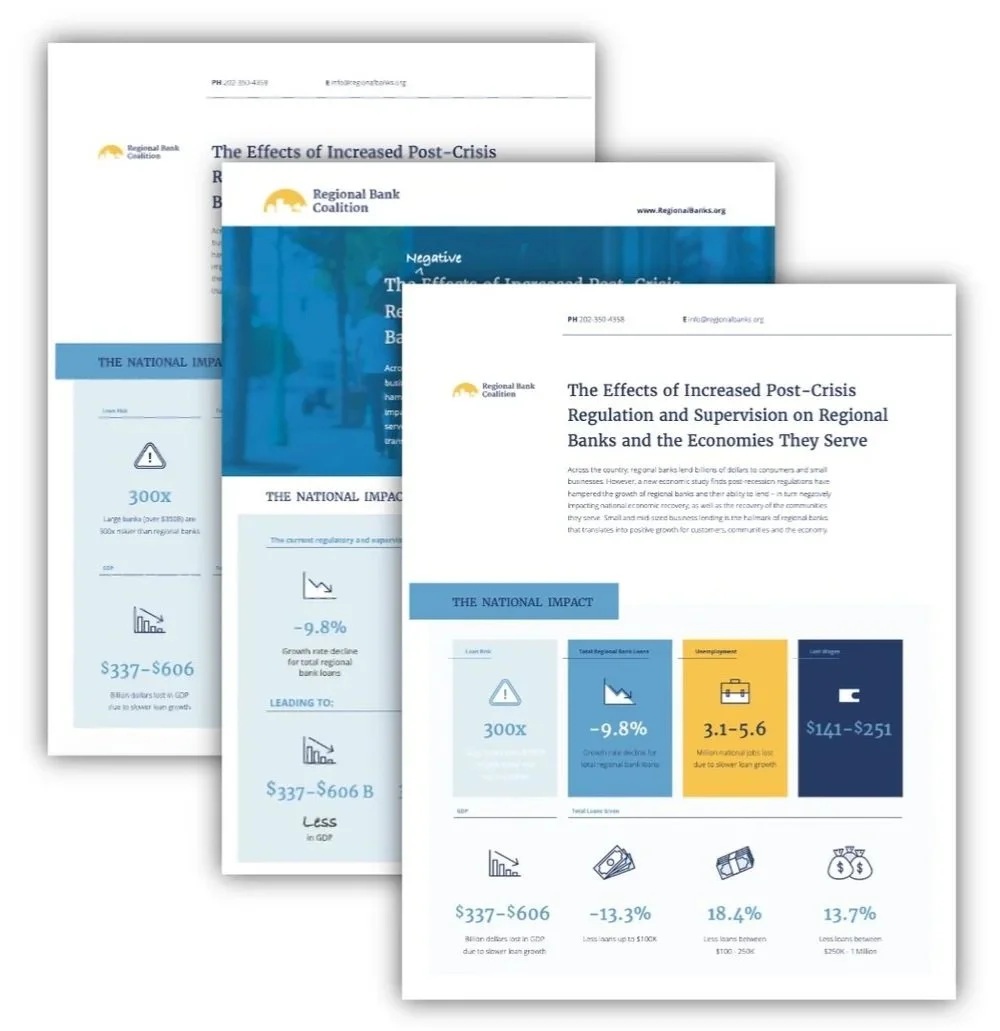
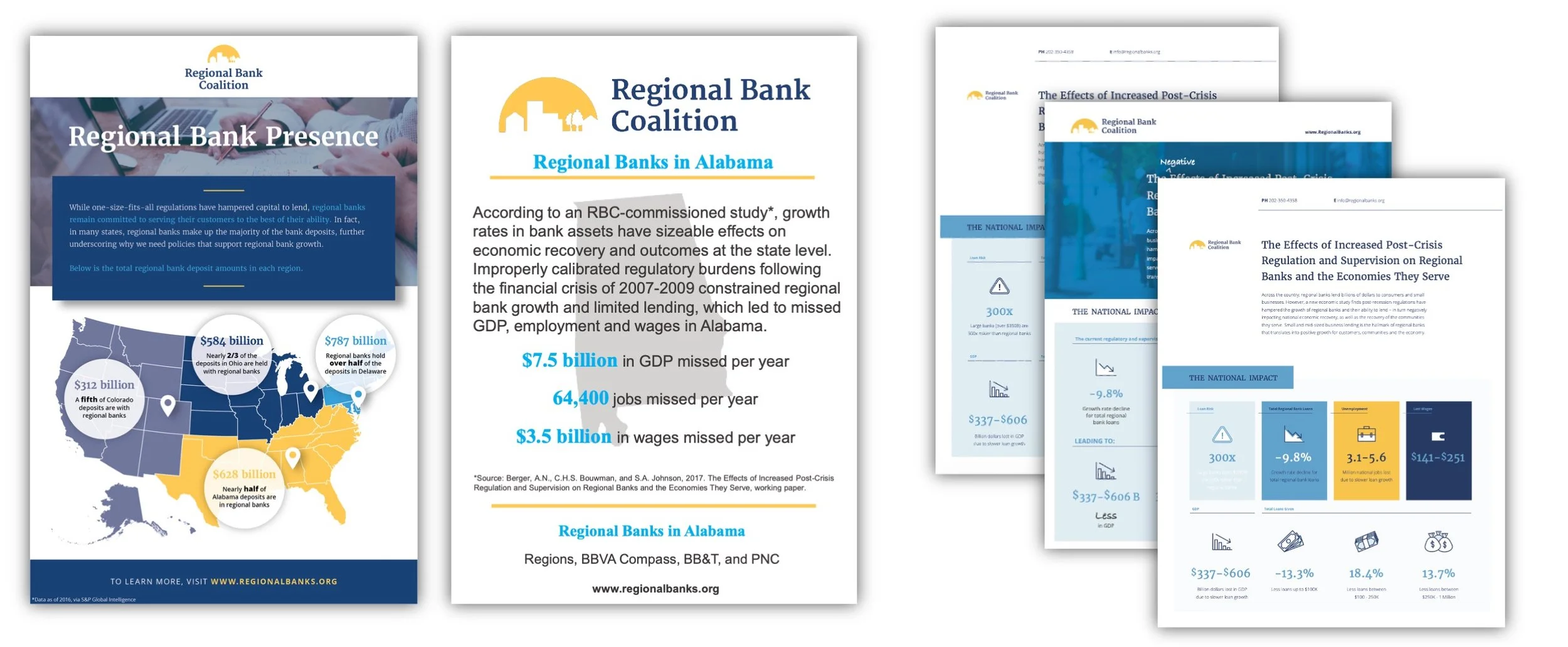
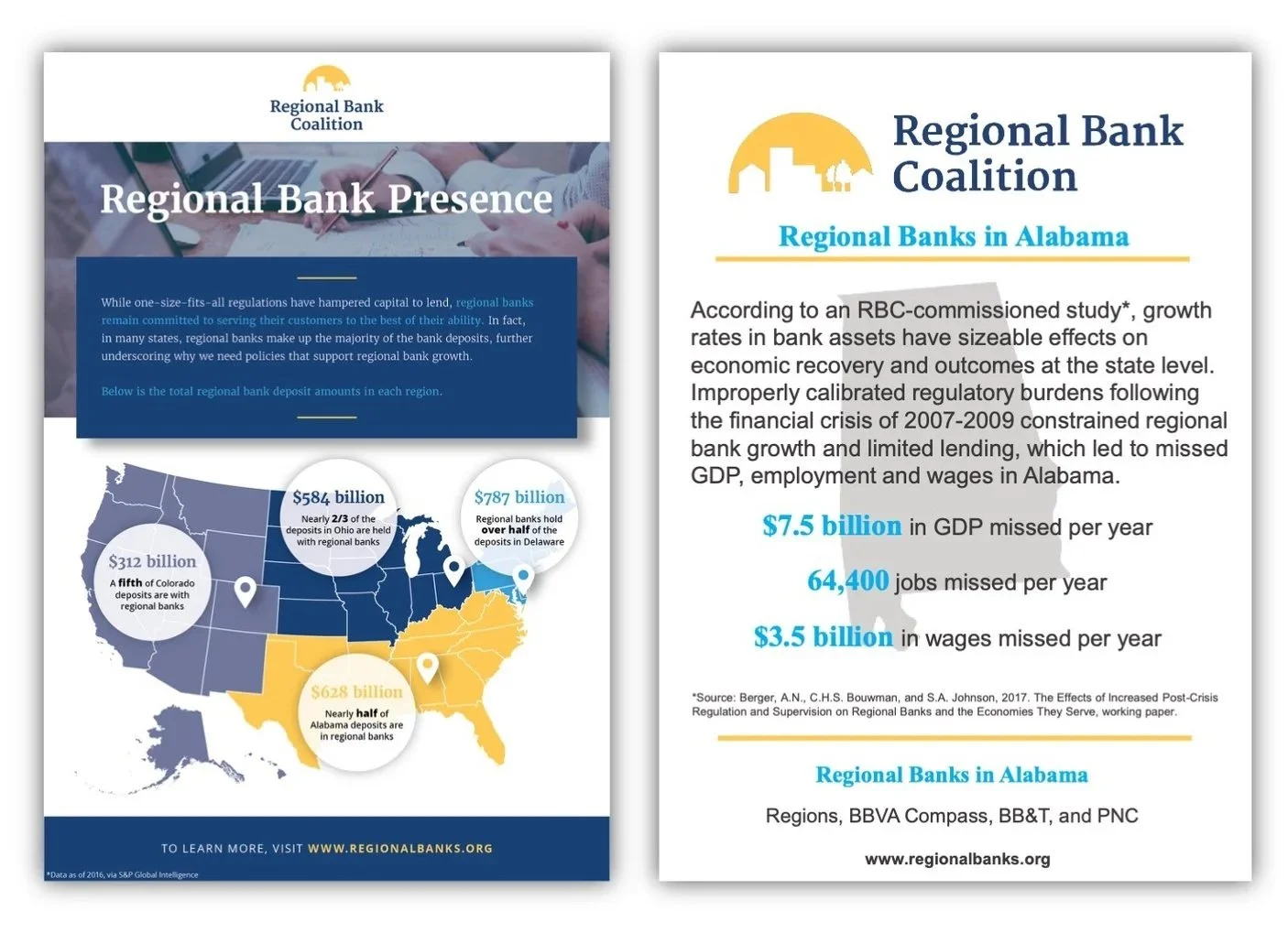
THG built and implemented a public affairs campaign to elevate the coalition and its point of view, to differentiate mid-size, regional banks from Wall Street and community banks, and to garner support for regulatory reform among policymakers and key influencers. THG employed a two-pronged strategy that directly targeted decision-makers inside the Beltway and built enduring support by humanizing the industry. THG’s campaign married a variety of tactics, including leveraging the voices of local academics, economists, business leaders, and business owners, as well as commissioning an economic study.


RESULTS
The campaign successfully defined regional banks as an important collection of financial institutions and changed the legislative narrative.
Through the campaign and with coordination between communications and lobbying efforts, the Regional Bank Coalition gained support from policymakers on both sides of the aisle, moving swing policymakers to a more favorable position. Over the course of the campaign, the team secured 73 national news and inside-the-beltway media placements in top publications, including Bloomberg, Politico, and The Wall Street Journal, as well as 25 local and state op-ed placements across nine states. Using third-party validators, the team secured 15 blog posts and op-eds aligned with and advocating for RBC’s position.
After prolonged negotiations, a bipartisan-sponsored bill (S. 2155), originating in the Senate Banking Committee, was signed into law in May 2018, reforming the Dodd-Frank regulations that hindered commercial lending and full post-crisis recovery. Specifically, the bill raised the arbitrary asset threshold used to determine which financial institutions are deemed SIFIs from $50 billion to $250 billion.
In late October, regional banks saw additional success as the Federal Reserve proposed examining important factors beyond a bank’s asset size to tailor regulations for banks with more than $250 billion in assets.