

Brooke Ainslie
Most organizations invest significant resources into a survey, economic impact study, poll, or white paper. You pour countless hours and dollars into this work. The findings are compelling, and the methodology is airtight; the conclusions reinforce exactly what you hoped to prove.
Then it launches. And...nothing happens.
A few stakeholders download it. Maybe it gets shared on social media for a day or two. But the audience it was meant to reach (the policymakers, influencers, advocates, and decision-makers) moves on.
When that happens, most organizations often assume they have a research problem. They don’t. They have a communications problem.
Here’s what often goes wrong: The research was never translated into a compelling story. Research rarely shifts the narrative. The public affairs strategy around it does.
Despite What They Say, Data Rarely Speaks for Itself
Data requires interpretation and context. Most importantly, it requires someone to explain why it matters.
People encounter dozens of statistics a day, from news headlines and economic reports to advocacy campaigns and industry studies. Don’t forget about the regular ads they see about all their favorite consumer products.
Nobody has the time to decode every figure or draw their own conclusions. If you make them do that work themselves, they won't.
The organizations that break through aren't always the ones with the best research. They're the ones that have the best translation of it.
The Missing Piece? We Forget About Our Human Audience
If you can’t explain complex findings to the general public in plain English, you’ll lose decision-makers, too. Leaders, legislators, and executives are just as overstimulated and distracted as everyone else.
Rule of thumb: If the general public can understand your core message, your primary target audience will get it instantly.
A report showing a policy could increase economic output by 2.4% means something to an economist. To a state legislator, however, the more important question might be what that growth means for employers and workers back home: not "2.4% GDP growth," but "400 new jobs in your district."
A healthcare study may contain pages of compelling clinical data on hospital readmission rates, but patients and caregivers are often more engaged in the data when the conversation shifts to quality of life: not "30% fewer hospital readmissions," but "more nights at home instead of in the hospital."
Bottom line: People connect with real-life consequences quicker than they connect with the numbers.
Facts inform. Stakes persuade.
Research Is Just One Piece of The Communications Strategy
Without an intentional distribution strategy, even the most compelling data remains buried in a PDF that few will ever read. The best story still needs a way to travel.
That's why the most effective public affairs campaigns use a surround-sound approach. A report may provide the intellectual foundation, but it gains public influence only when its findings are translated into opinion pieces, breaking news coverage, trade publication commentary, and digital content.
When your core message reaches people repeatedly through different voices and platforms, individual awareness transforms into institutional belief, and credibility grows.
While paid media drives syndication and coverage, driving real policy or behavioral action requires precision targeting. It isn't enough for the public to stumble across your work; the people empowered to make decisions must see it when it matters most.
Strategic digital advertising puts key findings directly in front of the decision-makers and stakeholders who can act on them, ensuring your research cuts through the noise of today’s crowded media landscape.
Conclusion
Research only creates value when it drives action. That means simplifying complex data, making the stakes personal, and reinforcing key insights across multiple trusted channels. High-impact engagement does not happen by accident, and it rarely happens inside a single report. The next time your team publishes a report: Don't just launch. Make sure it lands.
The Herald Group (THG) is a bipartisan public affairs and strategic communications firm based in Washington, D.C., running advocacy campaigns, coalition building, and digital advertising for clients across industries and across the political spectrum. THG turns research and data into campaigns that turn findings into messages that reach the right audiences and move them to act. Get in touch.
Other Thought Leadership Posts

Campaigns this cycle leaned on creators, conversational video, and familiar settings to reach voters. Companies and trade associations can apply the same lessons to their 2027 advocacy strategy, with a few important differences.

The transition to the 120th Congress presents a critical opportunity for organizations to build relationships with incoming lawmakers. Here are 12 tactics organizations should consider as they prepare for the new Congress.

With Congressional control flipped, Democrats have signaled that oversight and investigations could reach unprecedented levels in the next year.

As the Make America Healthy Again (MAHA) movement evolves following the 2026 midterm election, Democrats are seeking to reshape its public health agenda and find ways to incorporate the MAHA agenda into their platform. Here’s what this political shift could mean.

Third-party groups help build credible outside voices for your issues from institutions or academics. Influencers provide trusted audience access and make the messaging personal and consumable. Effective public affairs campaigns know when to use each.
Reddit and other online forums can reveal where an issue is taking shape, which narratives are spreading, and when an informal conversation is becoming a public affairs threat.

Unconventional public affairs advocacy tactics can make an issue impossible to ignore by using targeted activations to reach decision-makers, create earned media opportunities, and strengthen every element of a broader public affairs campaign.

Research alone rarely drives action. Learn how to translate complex data into compelling stories, reach key decision-makers, and build a public affairs strategy that ensures your findings land.

In litigation, regulatory investigations, and reputational crises, organizations often find themselves trapped between two competing realities: legal counsel wants to minimize risk, while stakeholders want answers. Here’s how to communicate when you cannot share the whole story.
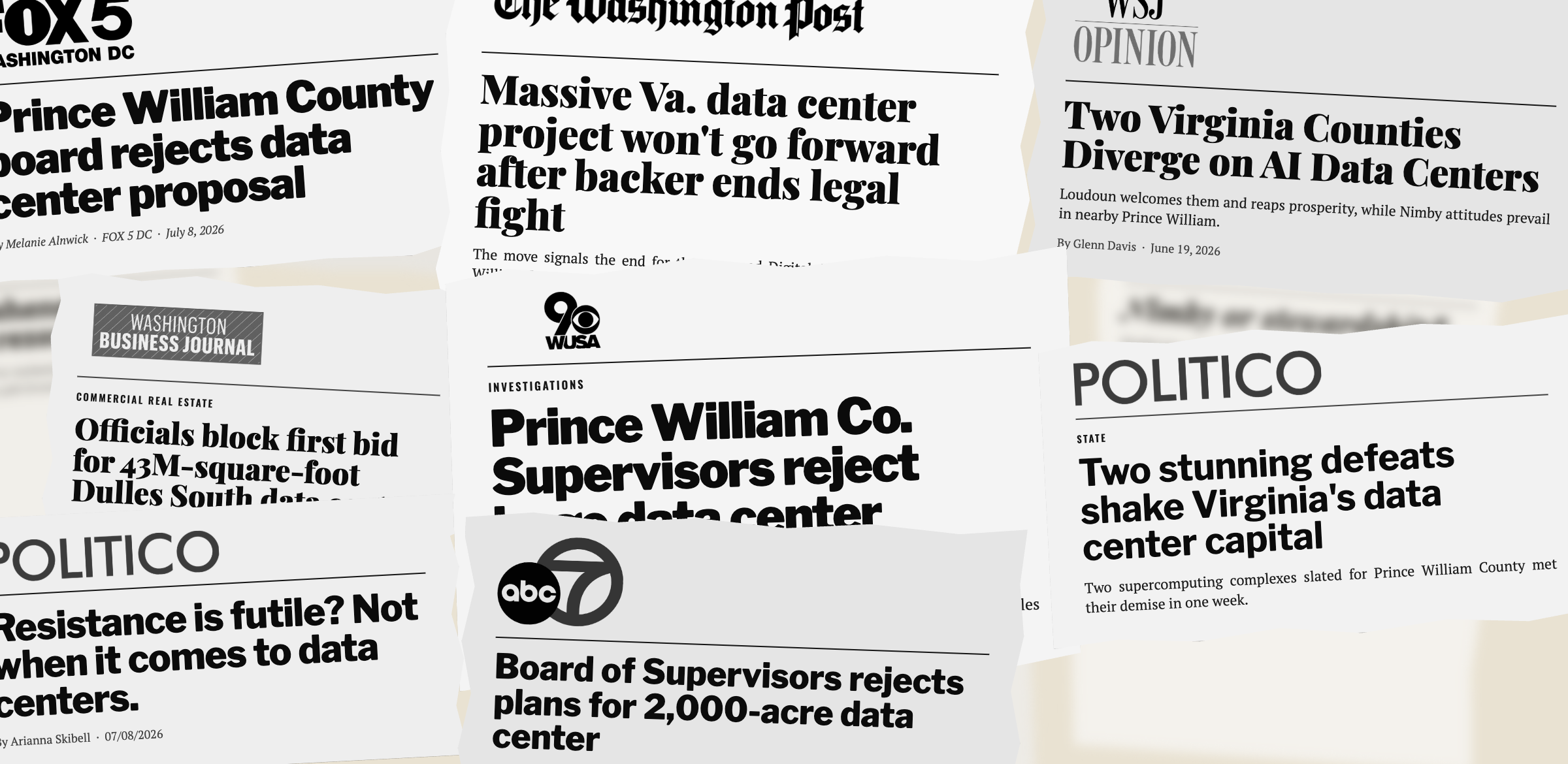
Prince William County’s data center votes aren’t the end of the industry. They’re a reminder that communities need more than facts and figures. They need to understand what these projects mean for their future and why they should welcome them.
SCOTUS ruling reshapes campaign spending, giving party committees new leverage and changing how corporate advocacy teams plan for 2026.

Mergers are no longer judged on financial merits alone. Public affairs strategy is essential to defining the narrative, managing scrutiny, and moving stakeholders toward approval.

Most organizations have no idea what AI engines say about them — and that blind spot is costing them. As AI visibility becomes the new first impression for journalists, staffers, and advocates, the stakes have never been higher.
A congressional investigation is never just a legal matter. Companies that prepare now—with legal, communications, government affairs, and stakeholder teams aligned—will be better positioned to protect their reputation before a negative narrative takes hold.

Modern advocacy requires more than a strong lobbying strategy or broad public awareness campaign. To drive real policy outcomes, organizations need a synchronized inside-outside game that pairs Capitol-level strategy with constituent-driven pressure.

Most organizations treat media relations as a crisis tactic—but the ones that weather storms best build press relationships long before trouble hits. Here's why a sustained media strategy is essential in public affairs.

As AI floods the information landscape, policymakers struggle to know who to trust. Here's why strategic alliances with credible third-party voices have become a defining advantage in public affairs.

The public affairs landscape in 2026 looks nothing like it did two cycles ago. Here's what practitioners need to understand—from the midterm environment to state-level fights to media fragmentation.

AI is reshaping public affairs workflows—but speed alone doesn't drive outcomes. Here's how to integrate AI intentionally without losing the strategy, relationships, and credibility that actually move the needle.

The era of top-down messaging is over. Here's how public affairs professionals can earn attention, build trust, and drive real outcomes in today's decentralized media landscape.

In a world of AI-generated content and exhausted audiences, public affairs creative has to work harder to connect. Here are five shifts reshaping what effective campaigns look like in 2026.

Election years don't eliminate the ability to change the narrative—they change what it takes. Here's what public affairs teams need to understand about winning in a compressed 2026 midterm environment.

At the University of Houston’s Energy Transition: Winds of Change symposium, it was clear that we are not in an energy transition, we are in the midst of an historic energy transformation that will be only possible through the partnership of public policy, industry and local communities.
The lame duck session provides special opportunities to reach decision-makers and make your messages heard loud and clear. The Herald Group’s latest blog highlights effective tactics for making an impact during the lame duck session and setting the stage for next year.

An effective digital grassroots campaign can be a critical element of a “surround sound” strategy that helps your issue break through the noise on Capitol Hill. VP Sharon Copeland shares three keys to bringing your programs to the next level.
Breaking through during election season is harder than ever—but with the right budget, timing, messengers, and media mix, it's possible to cut through the noise and drive real impact.