

EC Wheatley
The information environment facing today’s policymakers is evolving faster than anyone could have anticipated. Artificial intelligence has dramatically accelerated the speed and scale of content creation. Much of it is unmistakably good, but there are also systemic downsides, including the volume of unverified material circulating across social media platforms. The result is a communications ecosystem where information is abundant, but confidence in who to listen to or trust is scarce.
Companies face a growing challenge: ensuring their messages not only reach the right decision-makers but are also believed.
In an ecosystem defined by AI-generated content, credibility has become a strategic advantage, and few are better positioned to provide that credibility than trusted, well-established third-party voices.
Understanding Strategic Alliances
Successful public affairs campaigns rely on tightly integrated strategies that leverage multiple influential voices, channels, capabilities, and audiences to advance key messages and ultimately achieve policy or political goals. Increasingly, strategic alliances with credible outside validators play a critical role in elevating issues and amplifying those messages. These organizations may include:
Think tanks.
Advocacy groups.
Adjacent industry associations.
Academic centers.
Research institutions.
Key opinion leaders.
These partners contribute their own expertise, networks, and reputational credibility, helping validate messages and reach audiences that a single company may not reach or influence on its own. By cultivating and managing these partnerships around shared priorities, companies can strengthen their advocacy efforts and ensure their message is communicated through multiple trusted voices to the right audiences.
The New Reality: Policymakers Are Navigating an AI-Flooded Landscape
AI has made it nearly effortless to generate commentary, pseudo-expert analysis, and reports that mimic the look and feel of authoritative research. Policymakers and staff must now distinguish between evidence-based insights and AI-generated conjectures. Anonymous sources, algorithmic remixing, and fabricated authority can crowd out genuine expertise, credible scholars, and well-researched analysis.
As a result, organizations are increasingly turning, or returning to, partnerships with aligned third-party voices with proven track records of both reach and influence – sources with established missions, verifiable expertise, and institutional credibility.
These voices:
Cut through noise and anchor debates in fact.
Bring real-world depth and institutional experience.
Provide a reliable compass for the media.
Offer authenticity in an era where it is in short supply.
Looking Ahead
Policymaking is ultimately a human endeavor, and AI is reshaping how stakeholders discover and process information. Stakeholders trust people, not algorithms, to help them interpret context, understand consequences, and navigate trade-offs. AI cannot replace judgment, experience, human relationships, or authentic perspectives.
The volume of synthetic content will only grow, and with it, the difficulty of distinguishing real expertise from fabricated authority.
Amid this change, one dynamic remains constant: credibility is earned, not generated. Companies that invest now in cultivating authentic relationships with credible third-party voices will be best positioned to shape debates, inform policymaking, and provide clarity in a crowded landscape.
AI can move information faster than ever, yet it is trusted human voices that make it understandable and actionable.
Other Thought Leadership

Third-party groups help build credible outside voices for your issues from institutions or academics. Influencers provide trusted audience access and make the messaging personal and consumable. Effective public affairs campaigns know when to use each.
Reddit and other online forums can reveal where an issue is taking shape, which narratives are spreading, and when an informal conversation is becoming a public affairs threat.

Unconventional public affairs advocacy tactics can make an issue impossible to ignore by using targeted activations to reach decision-makers, create earned media opportunities, and strengthen every element of a broader public affairs campaign.

Research alone rarely drives action. Learn how to translate complex data into compelling stories, reach key decision-makers, and build a public affairs strategy that ensures your findings land.

In litigation, regulatory investigations, and reputational crises, organizations often find themselves trapped between two competing realities: legal counsel wants to minimize risk, while stakeholders want answers. Here’s how to communicate when you cannot share the whole story.
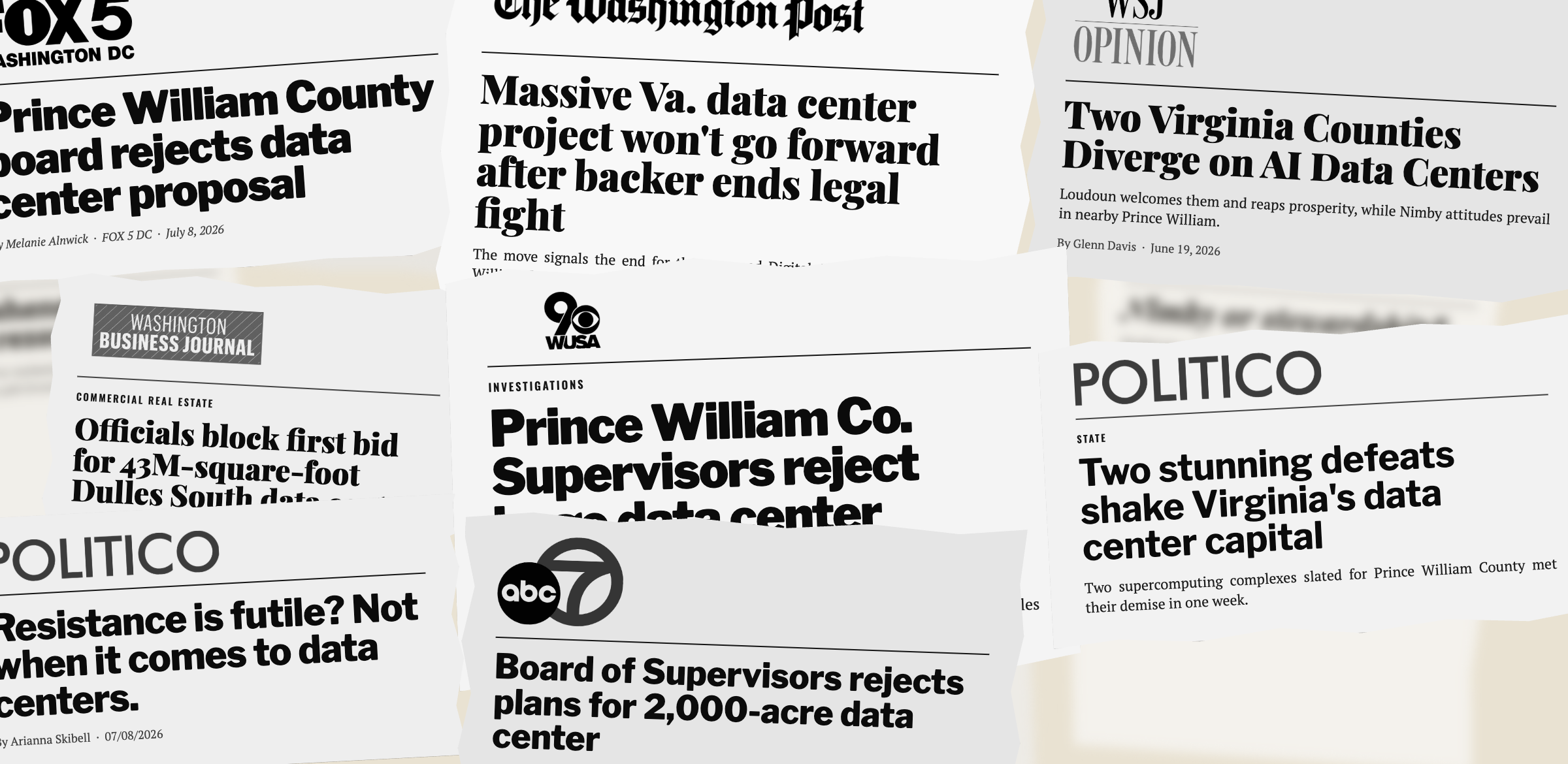
Prince William County’s data center votes aren’t the end of the industry. They’re a reminder that communities need more than facts and figures. They need to understand what these projects mean for their future and why they should welcome them.

SCOTUS ruling reshapes campaign spending, giving party committees new leverage and changing how corporate advocacy teams plan for 2026.

Mergers are no longer judged on financial merits alone. Public affairs strategy is essential to defining the narrative, managing scrutiny, and moving stakeholders toward approval.

Most organizations have no idea what AI engines say about them — and that blind spot is costing them. As AI visibility becomes the new first impression for journalists, staffers, and advocates, the stakes have never been higher.
A congressional investigation is never just a legal matter. Companies that prepare now—with legal, communications, government affairs, and stakeholder teams aligned—will be better positioned to protect their reputation before a negative narrative takes hold.

Modern advocacy requires more than a strong lobbying strategy or broad public awareness campaign. To drive real policy outcomes, organizations need a synchronized inside-outside game that pairs Capitol-level strategy with constituent-driven pressure.

Most organizations treat media relations as a crisis tactic—but the ones that weather storms best build press relationships long before trouble hits. Here's why a sustained media strategy is essential in public affairs.

As AI floods the information landscape, policymakers struggle to know who to trust. Here's why strategic alliances with credible third-party voices have become a defining advantage in public affairs.

The public affairs landscape in 2026 looks nothing like it did two cycles ago. Here's what practitioners need to understand—from the midterm environment to state-level fights to media fragmentation.

AI is reshaping public affairs workflows—but speed alone doesn't drive outcomes. Here's how to integrate AI intentionally without losing the strategy, relationships, and credibility that actually move the needle.

The era of top-down messaging is over. Here's how public affairs professionals can earn attention, build trust, and drive real outcomes in today's decentralized media landscape.

In a world of AI-generated content and exhausted audiences, public affairs creative has to work harder to connect. Here are five shifts reshaping what effective campaigns look like in 2026.

Election years don't eliminate the ability to change the narrative—they change what it takes. Here's what public affairs teams need to understand about winning in a compressed 2026 midterm environment.

At the University of Houston’s Energy Transition: Winds of Change symposium, it was clear that we are not in an energy transition, we are in the midst of an historic energy transformation that will be only possible through the partnership of public policy, industry and local communities.
The lame duck session provides special opportunities to reach decision-makers and make your messages heard loud and clear. The Herald Group’s latest blog highlights effective tactics for making an impact during the lame duck session and setting the stage for next year.

An effective digital grassroots campaign can be a critical element of a “surround sound” strategy that helps your issue break through the noise on Capitol Hill. VP Sharon Copeland shares three keys to bringing your programs to the next level.
Breaking through during election season is harder than ever—but with the right budget, timing, messengers, and media mix, it's possible to cut through the noise and drive real impact.