Prince William County Said No to Data Centers Twice. That's a Warning Sign.
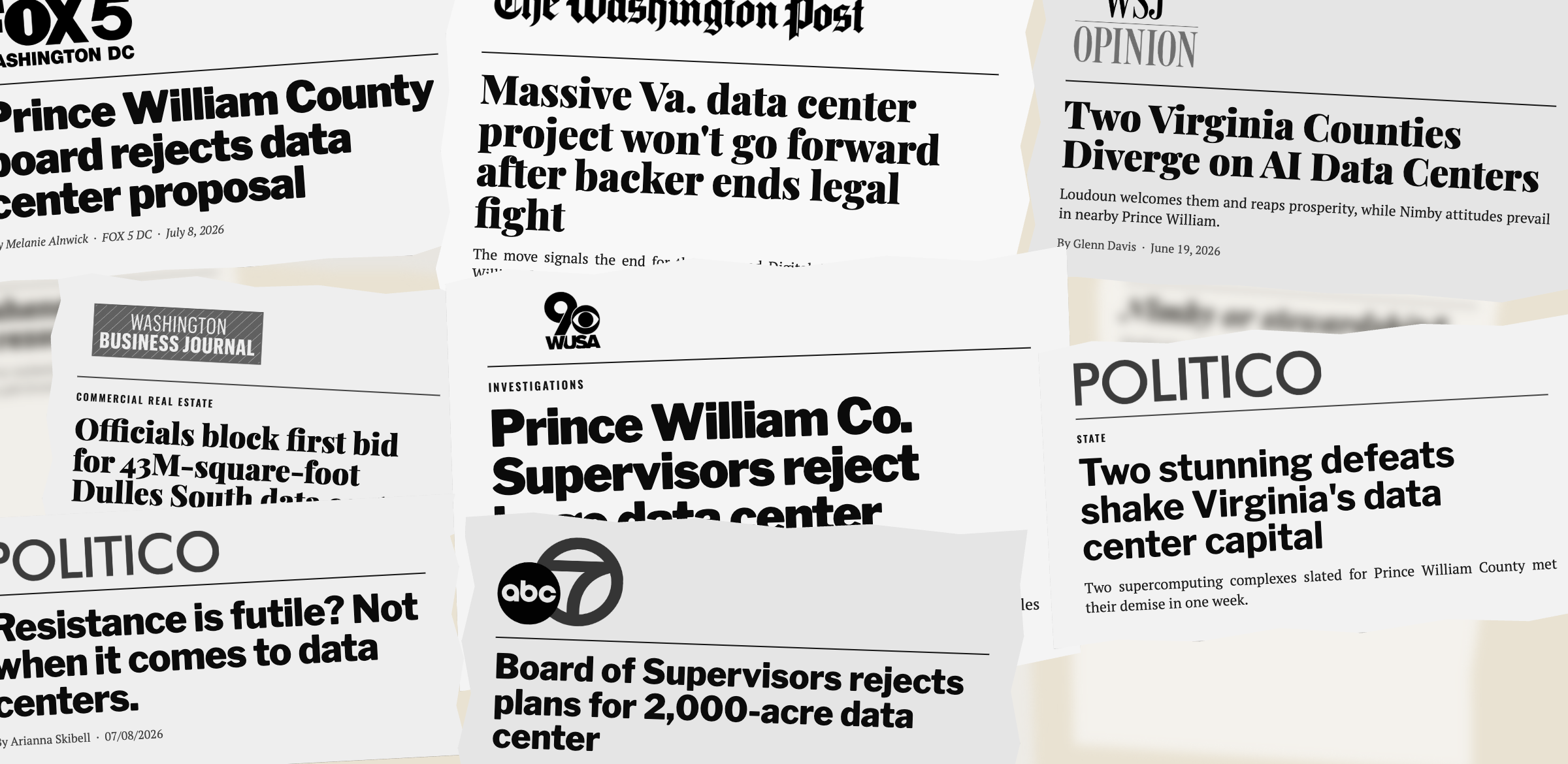

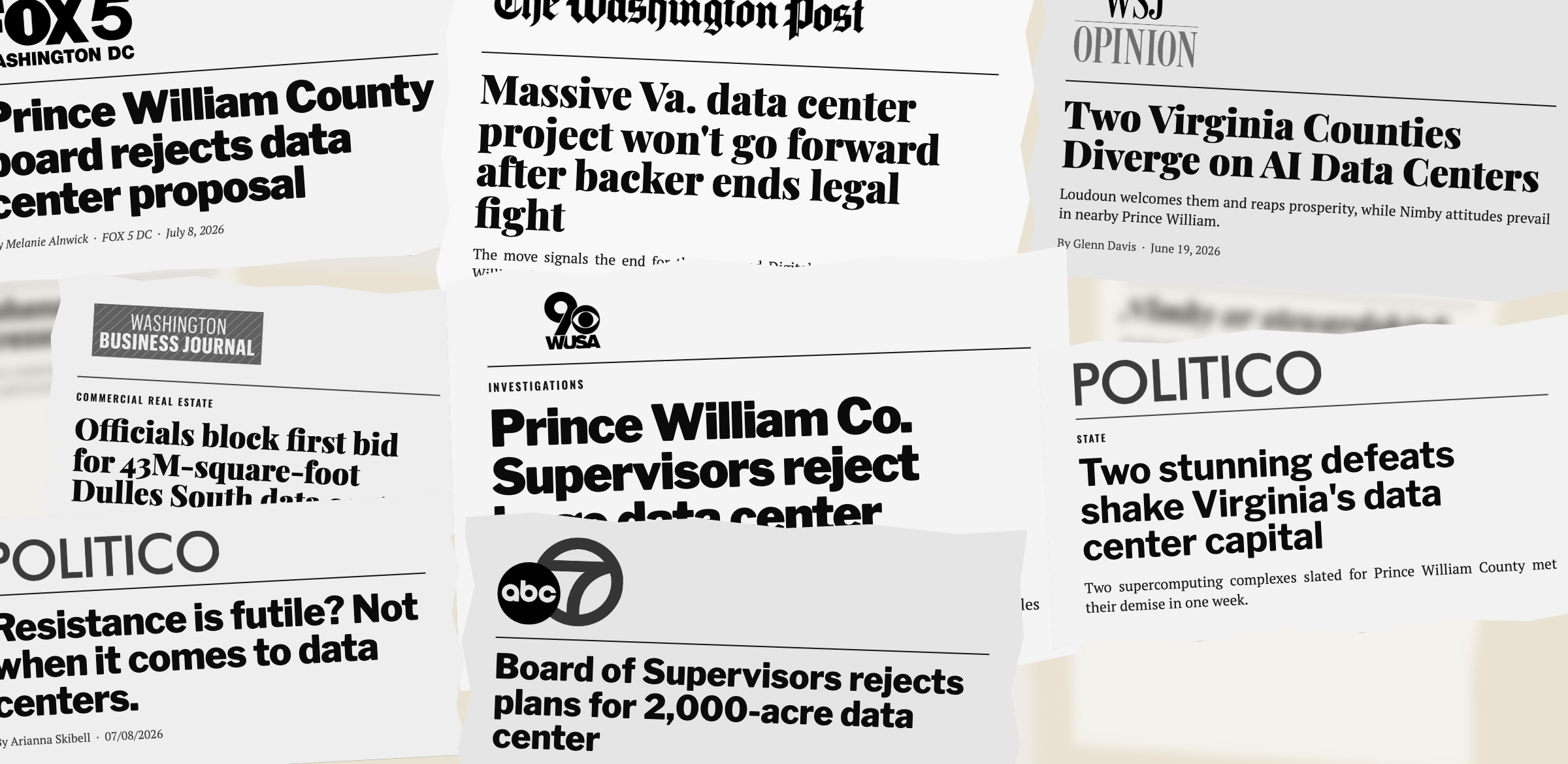
In the span of a week, Prince William County, Virginia, killed two of the largest data center proposals in the country. The Digital Gateway project died when its developer walked away from a legal fight. Days later, the Board of County Supervisors unanimously rejected the Dulles South Innovation Center, a 1,940-acre complex that would have sat just north of it. Residents who fought both projects are calling it a turning point. Some national commentators are treating it as proof that the data center era is running out of road.
It isn't. But it is a warning worth taking seriously.
Data centers are quickly becoming a form of critical infrastructure, as essential to the modern economy as power plants, highways, and rail lines were to previous generations. They are the backbone of cloud computing, artificial intelligence, and the digital economy. The United States and China are racing to build the computing power AI requires, which means building more data centers. If the United States wants to stay competitive, those projects have to be built somewhere. The challenge is making sure communities see them as an opportunity, not just another development project.
The Concerns Are Real, And So Is The Opportunity
The concerns that stopped the projects in Prince William County were real. Eighty-foot buildings next to neighborhoods, schools, and retirement communities raise legitimate questions. New transmission lines affect property owners. Years of lawsuits that cost millions of taxpayer dollars suggest something broke down long before the final vote. Communities have every right to ask tough questions, and developers should be prepared to answer them.
The benefits are just as real. Data centers generate tax revenue that helps fund schools, roads, and public services like water and utilities. They create construction jobs, permanent jobs, and new infrastructure investment. They can lower utility rates for local residents and offset the need—or temptation—to raise property taxes. The problem in Prince William County wasn't that those benefits didn't exist. It's that not enough people outside the industry heard about them in ways that connected with their own communities.
The Conversations Aren’t Going Away
Prince William County isn't the only place having this debate. Across the country, communities are weighing proposals for data centers, power projects, factories, and other major developments. At the same time, residents are asking tougher questions about where these projects belong, who benefits, and what the impact will be on their neighborhoods.
That doesn't mean development should slow down. It means developers have to earn public support, not just secure permits. The companies that succeed will be the ones that understand local concerns early, explain the benefits in plain language, and show how they're willing to address legitimate issues before opposition hardens.
Prince William County shouldn't be seen as a one-time event. It's a preview of the kind of pushback major projects are likely to keep facing across the country.
Tell The Story Well, Tell It Early, And Tell It Often
The lesson here is straightforward. Don't wait until a public hearing to start talking with the community. By then, many people have already made up their minds.
Successful projects start with early conversations. They explain what the project will bring, including jobs, tax revenue, and investment. They also address concerns about noise, water use, power, traffic, and land use directly and honestly.
It also means making real commitments and making sure the conversation reaches the right people, including neighbors, local officials, school leaders, and community organizations. Public hearings shouldn't be the first time people hear about a project.
Prince William County's vote is a reminder that building a data center isn't just an engineering, financial, or permitting challenge. It's also about building trust. As communities take a bigger role in deciding what gets built, the developers that engage early, communicate clearly, and earn local support will have the best chance of moving projects forward.
For 20 years, The Herald Group has helped companies navigate complex policy and public affairs challenges by building clear, credible campaigns that reach the communities, policymakers, and regulators who matter most.